
Embedded Systems & Product Development Consultancy · London, UK
Embedded systems for marine electronics and autonomous vessels
Equipment that has to work at sea, on rivers and in harbours: in the cold, the wet and the motion of a boat, often far from anyone who can fix it. We design the electronics and firmware for marine products, from AIS transponders and navigation displays to the sensing, control and autonomy behind uncrewed surface vessels.
Built for water, salt and distance
A marine device gets few second chances. Once it is fitted to a vessel or out on the water, a fault means a lost day at sea, a unit sent back or a craft that can’t be reached.
- Cold, damp, salt and constant vibration, with enclosures and connectors that have to stay sealed.
- Several radios in a small space: VHF, AIS, GNSS, Wi-Fi and cellular working side by side without interfering.
- Power from batteries, solar panels or a vessel supply that is anything but clean.
- Links to the rest of the vessel’s electronics, from navigation displays to engine and sensor data.
- Software updates in the field over USB, Wi-Fi or a remote link, because the device rarely comes back to the bench.
- On uncrewed vessels, a safe response when a sensor, a link or a battery fails far from shore.
We design for the water from the first block diagram, not for the lab.
What we build for marine products
- AIS and VHF equipment. Firmware for transponders and radio equipment: baseband loading, multi-processor control and start-up behaviour that has to be right every time.
- Navigation and display units. Embedded displays for maps, vessel positions and alarms, with fast map updates and responsive touch interfaces.
- Onboard connectivity. Wi-Fi and Bluetooth links to phones and tablets, and cellular or long-range radio links to shore.
- Autonomous and uncrewed surface vessels. Navigation and control computers running ROS 2, GNSS, IMU and compass fusion, camera-based obstacle detection with edge AI, and a supervisory layer that brings the craft to a safe state when something fails.
- Marine sensing and monitoring. Battery- and solar-powered sensors for water quality, the environment and vessel condition, reporting over low-power radio or cellular links.
- Test and production tools. Test jigs and PC tools in C# and Python for calibration and production test of marine electronics.
Engineering for life at sea
- Robotics & autonomous systems (ROS 2): navigation, control and mission software for uncrewed surface vessels. →
- Edge AI: on-device object detection on NVIDIA Jetson and similar hardware, so collision avoidance doesn’t depend on a link to shore. →
- Sensors & embedded algorithms: GNSS, IMU and compass fusion, filtering and calibration for a moving platform. →
- Wireless & IoT connectivity: Wi-Fi, Bluetooth, cellular and sub-GHz links on board and to shore. →
- Bootloaders, OTA & device security: field updates over USB, Wi-Fi or cellular that can’t leave a unit without working firmware. →
- Low-power design: battery and solar power budgets for buoys, sensors and small craft. →
- Testing & verification: climate-chamber testing and unit tests that catch timing faults before the water does. →
Marine work in service
Client names stay private. The engineering doesn’t.

Wi-Fi, VHF and mapping-system firmware for a marine AIS transponder already at sea
Read the case study
Smart parking from sensor to cloud: nRF52840 firmware, Bluetooth mesh and Firebase
Read the case studyMore work on the water and outdoors
A C# and YAML PCB test jig for marine electronics, a secure NB-IoT field sensor and more.
View case studiesFrequently asked marine questions
Can you build the autonomy for an uncrewed surface vessel?
Yes. We develop the onboard computer and its software: ROS 2 navigation and control, GNSS and IMU fusion, camera-based obstacle detection with edge AI, and the link to the operator ashore. We can work alongside your naval architects and boat builders, or with your own software team.
Can you work on a product that is already at sea?
Yes. We have traced and fixed faults in marine products already in service, including a Wi-Fi fault on an AIS transponder fixed in half the time the client allowed.
How do you test for marine conditions?
We test firmware and hardware in climate chambers, run long soak tests on the bench and support your formal environmental and EMC testing, fixing what comes up before the product goes on board.
Can our device connect to the vessel’s existing electronics?
Yes. We implement the interfaces your product needs, from serial, CAN and Ethernet links to Wi-Fi and Bluetooth connections to phones and tablets, and test them against the equipment it has to work with.
Do you design the enclosure and mounting as well?
Yes. Mechanical design is part of our product development work, so the enclosure, connectors and mounting are designed together with the electronics, with sealing and corrosion in mind.
Building something that has to work on the water?
Tell us what it has to do and where it will be used. An engineer will read it and reply within one business day.
Talk to an engineerLatest from the blog
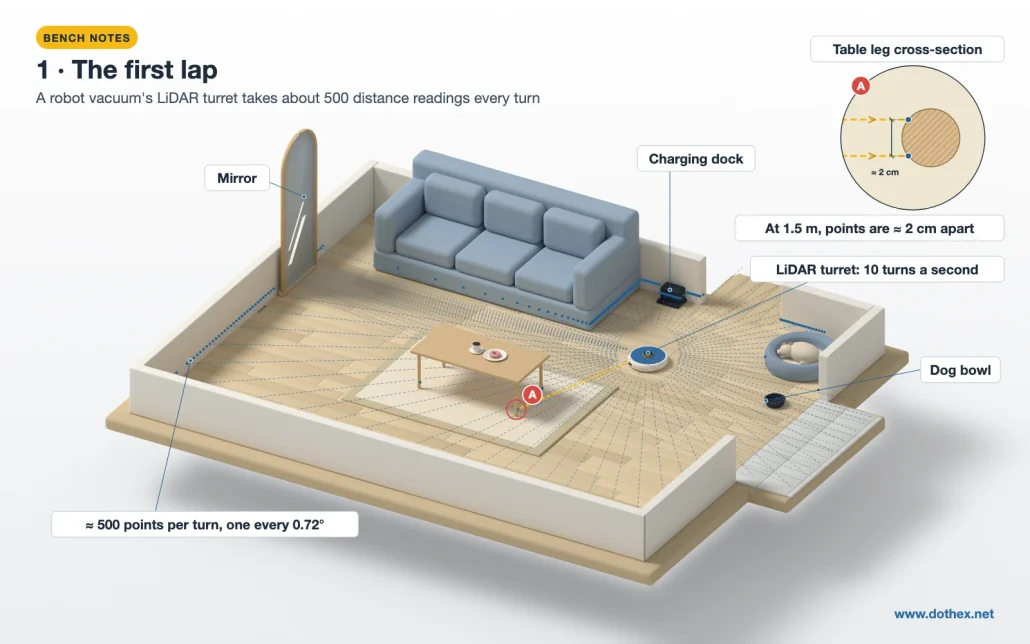
SLAM in a living room: how a robot vacuum builds a map
November 24, 2026
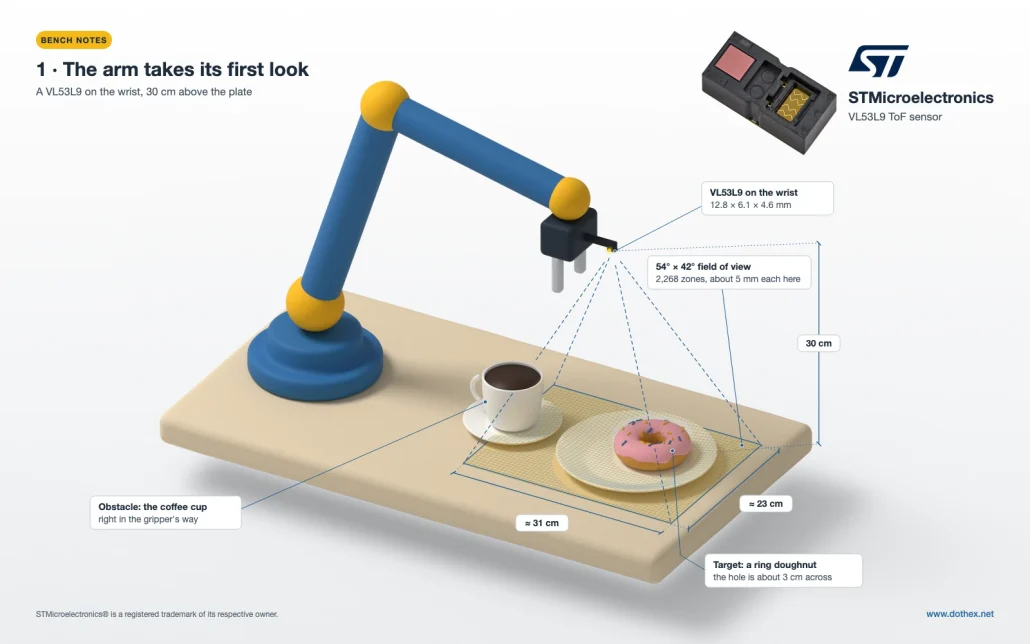
2.3K zones: what a robot sees in 3D with ST’s VL53L9
November 10, 2026

Ultra Low Power Microcontrollers: STM32L5 Series
March 7, 2020