
Embedded Systems & Product Development Consultancy · London, UK
Wireless and IoT connectivity
Connected devices that pair first time, keep their link and last on a battery. We build Bluetooth LE, Mesh, Wi-Fi, Thread and cellular firmware, and the path from the radio through MQTT to your cloud.
Links that work on the bench and drop in the field
Wireless problems rarely show up on a desk next to the router. They appear in metal enclosures, on a phone with another app open, or at the edge of coverage.
- Bluetooth connections that drop with certain phones or after an OS update.
- Range far below the datasheet because of the antenna, the enclosure or the matching network.
- Battery life lost to radios that advertise, scan or stay connected more than they need to.
- Cellular devices that work in the office but fail to register in the field.
- Wi-Fi that slows down or reconnects when several clients join.
- Certificates and keys handled ad hoc, so security depends on whoever set up the device.
We measure the link on real hardware, in real conditions, and fix the cause rather than the symptom.
Radios and protocols we work with
- Bluetooth LE and Mesh. Phone connectivity, GATT services, secure pairing and provisioning, and Bluetooth Mesh networks on Nordic and Silicon Labs chips.
- Range extension. RF front-end modules, antenna matching and advertising settings tuned with RF measurement equipment.
- Wi-Fi. ESP32 and other Wi-Fi modules with stable reconnection, several client connections at once and provisioning from a phone.
- Thread and Zigbee. Low-power mesh networks for home and building devices. →
- Cellular IoT. NB-IoT and LTE-M modems with eSIM, power-saving modes and fall-back strategies for poor coverage.
- Cloud connection. MQTT with X.509 certificates to AWS IoT Core, Firebase and other back ends, with device shadows and remote configuration. →
Getting a reliable link, step by step
- Pick the radio for the use case. Range, data rate, power budget, phone compatibility, coverage and certification cost decide between BLE, Wi-Fi, Thread and cellular.
- Design the antenna in early. Placement, keep-out areas and matching planned with the PCB layout, not after the enclosure is tooled.
- Build the protocol layer. Connection management, retries, timeouts and a message format that can grow with the product.
- Measure range and power. RF measurements, current profiles and tests with real phones, routers and networks.
- Prepare for certification. Pre-compliance checks for radio and EMC, so formal testing holds fewer surprises.
Chips, modules and cloud services
Bluetooth LE and Thread: Nordic nRF52 and nRF53 with the nRF Connect SDK, Silicon Labs EFR32, nRF21540 RF front end
Wi-Fi: Espressif ESP32 with ESP-IDF, Wi-Fi modules alongside NXP and STM32 hosts
Cellular: NB-IoT and LTE-M modems from Quectel, u-blox and Nordic nRF91, eSIM
Cloud and protocols: MQTT, AWS IoT Core, Google Firebase, TLS with X.509, Modbus and REST gateways
Connected devices in the field
Client names stay private. The engineering doesn’t.


More connectivity work
A smart parking sensor linked to Firebase over BLE, a Bluetooth Mesh beacon with a range-extending front end, and Wi-Fi fixes for marine transponders.
Ask about this workFrequently asked connectivity questions
BLE, Wi-Fi, Thread or cellular: which one?
It depends on range, data rate, power and where the data needs to go. BLE suits phone-connected and wearable devices, Wi-Fi suits mains-powered devices with more data, Thread suits low-power networks in buildings, and NB-IoT or LTE-M suits devices far from any gateway. Many products combine two.
Can you improve the range of our device?
Usually. We check the antenna, its placement and matching, the enclosure and the radio settings, then measure. Fixes range from a small matching change to adding an RF front-end module.
How long will it run on a battery?
That depends mostly on how often the radio talks. We model the energy budget early, then measure it on the device with a power analyser and tune intervals, connection parameters and sleep modes.
Do you handle the cloud side as well?
We build the device side and the connection: provisioning, certificates, MQTT topics and remote configuration. We work with your cloud team, or set up a working back end on AWS IoT Core or Firebase for the first units.
Can you help with radio certification?
We design for it and run pre-compliance checks, then support the test house during formal testing. Using a pre-certified module can cut the cost and time a lot.
How do you secure the connection?
Unique credentials per device, mutual TLS with X.509 certificates, keys in a secure element where possible, and signed firmware updates.
Need a device that stays connected?
Tell us what it connects to, how far, and how long it has to run on a battery.
An engineer will read it and reply within one business day.
Latest from the blog

Event Scope: EW – ELECTRONIC WARFARE EUROPE 2020
June 22, 2020
Event Scope: MICRO NANO MEMS 2020
June 8, 2020
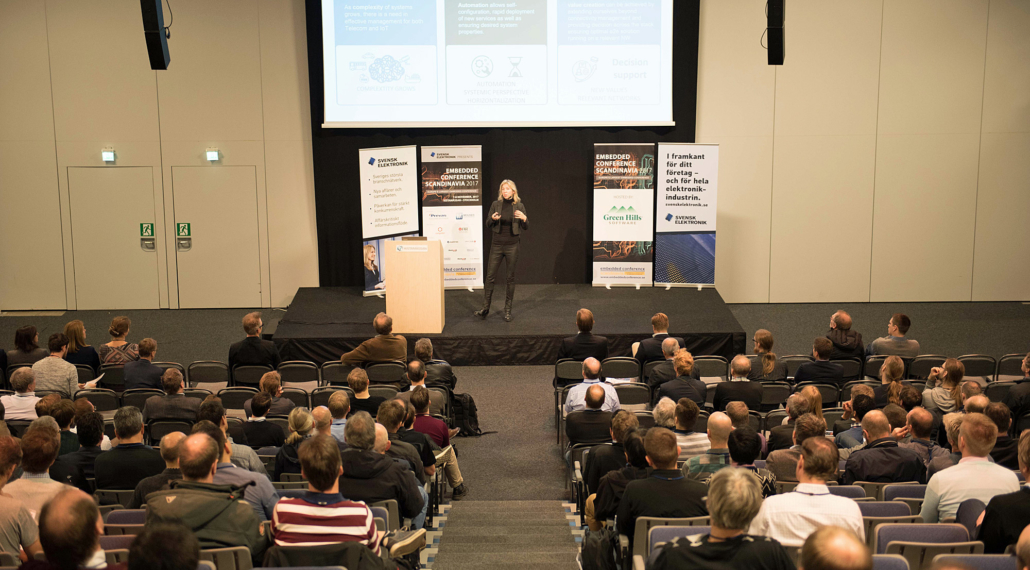
Event Scope: EMBEDDED CONFERENCE SCANDINAVIA 2020
May 29, 2020