
Embedded Systems & Product Development Consultancy · London, UK
Embedded systems for industrial and energy equipment
Devices that run around the clock in plants, substations and hazardous areas. We design the electronics, firmware and tools for industrial monitoring and control equipment, with the interfaces, remote configuration and acceptance testing that sites demand.
Built for sites that never switch off
Industrial equipment isn’t judged on the bench. It’s judged after years of continuous running on a site with its own network, its own rules and an acceptance test at the end.
- Continuous operation through power interruptions, electrical noise and wide temperature swings.
- Integration with PLCs, SCADA and plant networks over Modbus, RS-485, 4–20 mA and Ethernet.
- Hazardous-area requirements wherever gas or dust may be present.
- Remote configuration, calibration and diagnostics, because every site visit costs a day.
- Product lifecycles of ten years or more, with parts that have to stay available.
- Factory and site acceptance, with documented evidence for every requirement.
We design for the site from the first block diagram, not for the lab.
What we build for industrial sites
- Monitoring and measurement equipment. Air-quality, gas and environmental monitors with local logging, alarms and network reporting.
- Wireless sensor transmitters. Sub-GHz and 2.4 GHz links carrying 4–20 mA and digital sensor data, with Modbus RTU and TCP into the control system.
- Controllers and gateways. Ethernet, Wi-Fi and RS-485 devices that bridge field equipment to the plant network or the cloud.
- Touchscreen HMIs. Local displays for readings, alarms and configuration, with LVGL on microcontrollers or embedded Linux.
- Battery-backed field devices. LiFePO4 backup with a power path that rides through outages without a reset.
- Configuration and test tools. C# and Python applications for calibration, remote configuration and production test.
Engineering for the plant floor
- Industrial interfaces & networking: Modbus RTU and TCP, RS-485, 4–20 mA, CAN and Ethernet with a tuned TCP/IP stack. →
- Functional safety & ATEX: intrinsically safe design work to IEC 60079-11 and safety-critical firmware to IEC 61508. →
- Embedded HMI: touchscreen interfaces that stay responsive while the device measures and communicates. →
- RTOS: FreeRTOS and Zephyr firmware with deterministic timing for sensing and control. →
- Electronics & PCB design: multilayer boards with ESD, surge and EMC protection for industrial environments. →
- Production readiness: test jigs, calibration and FAT and SAT procedures.
Hardware in shipped products
Client names stay private. The engineering doesn’t.


More industrial work
A wireless transmitter carrying 4–20 mA and Modbus data over 868 MHz and 2.4 GHz, smart-parking devices from sensor to cloud and more.
View case studiesFrequently asked industrial questions
Can your devices talk to our PLC or SCADA system?
Yes. We implement Modbus RTU over RS-485 and Modbus TCP over Ethernet, read and generate 4–20 mA signals, and test against your control system or a simulator before site.
Do you design for hazardous areas?
Yes. We have carried out intrinsically safe design work to IEC 60079-11 (Ex ib), covering energy limitation, component derating and segregation. Certification itself is issued by a notified body; we prepare the design and the documentation for it.
Can devices be configured and calibrated remotely?
Yes. We build configuration and calibration into the firmware and provide PC tools that work over the site network, so engineers don’t have to open the enclosure.
Do you support factory and site acceptance?
Yes. We write the FAT and SAT procedures, take part in the tests and fix what comes up, including acceptance at regulated sites.
How do you deal with long product lifecycles?
We choose parts with long availability, identify alternates early, and keep the firmware structured so a component change doesn’t mean a rewrite.
Building equipment for industrial or energy sites?
Tell us what it has to measure, control or survive.
An engineer will read it and reply within one business day.
Latest from the blog
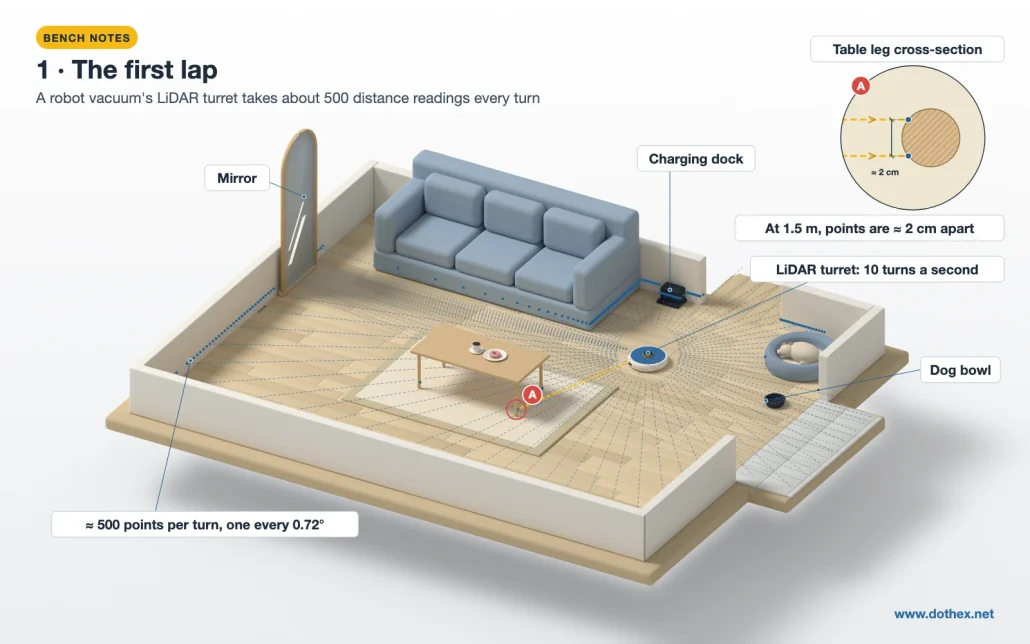
SLAM in a living room: how a robot vacuum builds a map
November 24, 2026
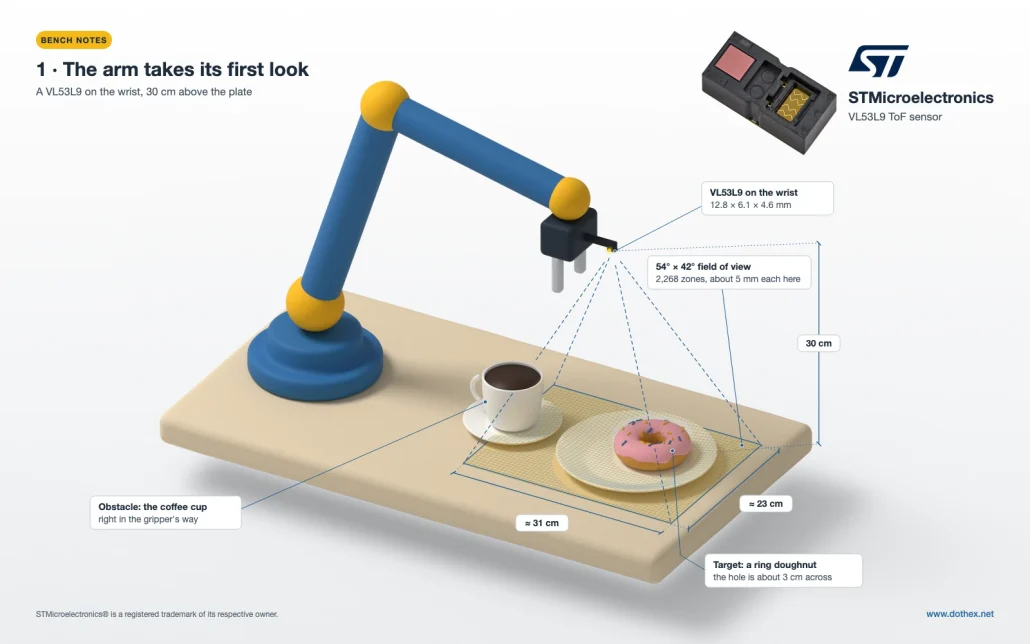
2.3K zones: what a robot sees in 3D with ST’s VL53L9
November 10, 2026

Ultra Low Power Microcontrollers: STM32L5 Series
March 7, 2020