
Embedded Systems & Product Development Consultancy · London, UK
Production readiness and manufacturing test
A board that works on the bench isn’t a product yet. We build the test jigs, production software, provisioning and calibration that let a factory build, check and ship every unit the same way, and the documentation that lets your team run it without us.
What changes when you build a thousand instead of ten
Ten prototypes can be checked by the engineer who designed them. A thousand units need a process that works without that engineer in the room.
- Every board tested by hand with a multimeter and a checklist, slowly and a little differently each time.
- Firmware, serial numbers, keys and certificates loaded by someone copying files.
- Sensors that need calibrating, and no record of how each unit was calibrated.
- Faults found by customers instead of at the end of the line.
- A design the factory can only build with rework, or can’t test at all.
Production readiness turns what the engineer knows into steps a machine can repeat and a factory can trust.
See how we workWhat we prepare for production
Everything between a working prototype and a line that ships good units.
Production test jigs
Fixtures with pogo pins or connectors that power each board, exercise every interface and give a clear pass or fail.
Production test software
Operator-friendly test applications in C# and Python that run the sequence and keep a record for every serial number.
Test firmware
Dedicated firmware that exercises the hardware quickly on the line, kept separate from the product firmware.
Programming and provisioning
Design for manufacture and test
Layout, test points, panelisation and assembly reviewed before the first production build. →
Factory and site acceptance
FAT and SAT procedures, test reports and support on site when your customer accepts the system.
Traceability
Results stored per unit, so a field return can be traced back to its test record and its batch.
Handover to your manufacturer
Work instructions, test procedures and training, so the factory can run the line without us.









How we take a product into production
We start before the first production build, not after the first failures.
- Define the test strategy. Agree what must be tested on every unit, what can be sampled and what counts as a pass.
- Design for test. Make sure the PCB has the test points, programming access and status signals the jig will need.
- Build the jig and the software. Fixture, test firmware and PC application developed together, then checked against known good and known faulty boards.
- Prove it on a pilot run. Run a small batch on the line, measure test time and yield, and fix whatever slows the operator down.
- Hand it over. Documentation, operator training and support through the first production builds.
What your factory receives
Hardware: test fixture, interface boards and cabling
Software: test firmware, the PC test application in C# or Python, programming and provisioning scripts, with source code
Documents test specification, work instructions, calibration procedure, FAT and SAT procedures
Data: a test record for every unit, yield reports and traceability by serial number
Production test in shipped products
Client names stay private. The engineering doesn’t.

Detection algorithms and safety-critical firmware for a device built at over a million units
A six-month evaluation of software, hardware and sensor technology with a large cross-functional team, before the design was committed.
Read the case study
An air-quality monitor for power stations, and its redesign
Technical lead and design reviewer for the hardware and firmware teams, from system architecture to acceptance at a regulated power-generation site.
Read the case studyMore production work
Python production tests for a device built at over a million units, provisioning and calibration for a wearable medical device, a C# and YAML PCB test jig for marine electronics and more.
View case studiesFrequently asked production questions
1. When should we start planning production test?
Before the layout is finished. Test points, programming access and status signals cost almost nothing on the first design, and a board revision if they’re added later.
Can you build a test jig for a product we didn’t design?
Yes. We work from your schematics, firmware and specification, and write test firmware if the product doesn’t already have it.
Do you work with our contract manufacturer?
Yes. We agree the test strategy and fixture with the factory, deliver the jig to them and support the first builds on their line.
How long will production test take per unit?
It depends on what has to be tested and calibrated. We aim for the shortest test that still catches real faults, and measure test time and yield on the pilot run. On one product, automating the release process cut total production time by 60%.
Can you provision devices for the cloud during production?
Yes. Unique keys and X.509 certificates, registration with services such as AWS IoT Core and secure programming, done per unit and recorded.
Do you support factory and site acceptance tests?
Yes. We write the FAT and SAT procedures, run or witness the tests with you and fix what comes up, including acceptance at regulated industrial sites.
Related services: Embedded software & firmware · Electronics & PCB design · Hardware/software integration · Debugging & troubleshooting · Product development
Related expertise: Edge AI · Robotics & autonomous systems · Embedded Linux · Functional safety & ATEX · Wireless & IoT · Sensors & embedded algorithms
Have an idea, or a prototype that needs to become a product?
Tell us what you want to build and where you are now.
Share your project with us, and we’ll get back to you within one business day.
Latest from the blog
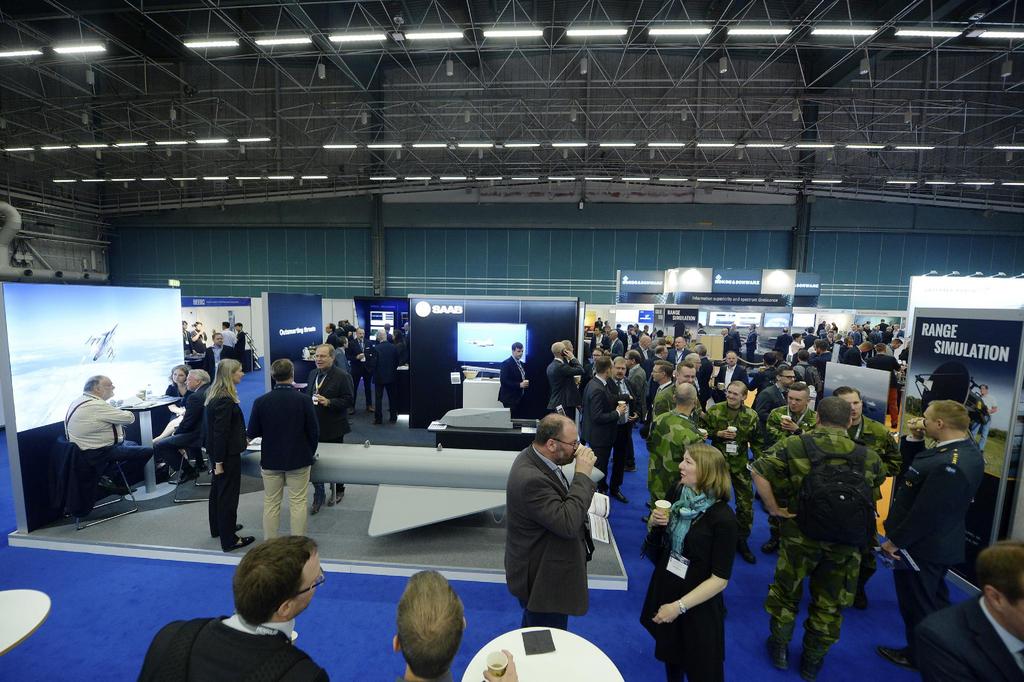
Event Scope: EW – ELECTRONIC WARFARE EUROPE 2020
June 22, 2020
Event Scope: MICRO NANO MEMS 2020
June 8, 2020
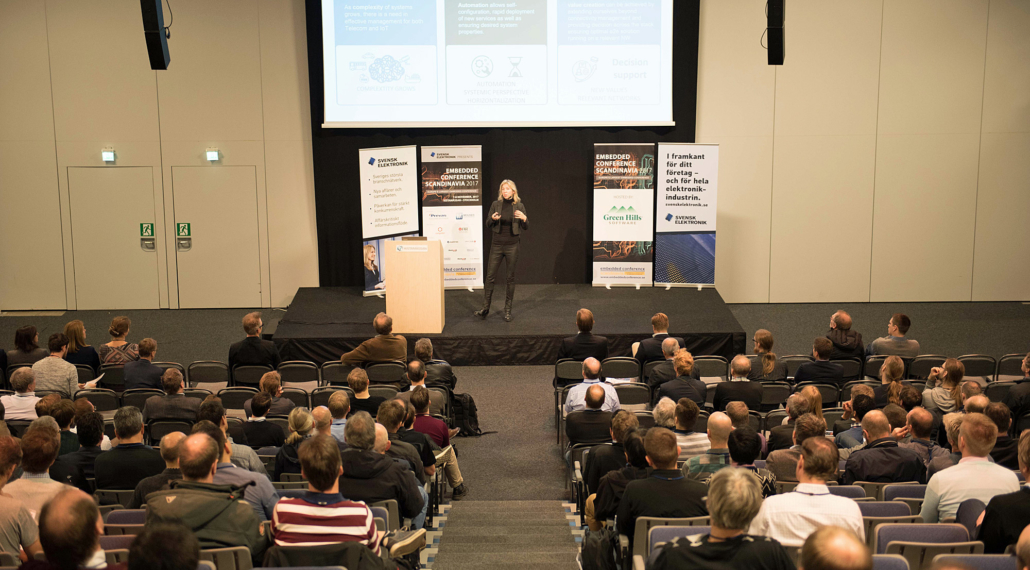
Event Scope: EMBEDDED CONFERENCE SCANDINAVIA 2020
May 29, 2020