
Embedded Systems & Product Development Consultancy · London, UK
An ATM security device, from schematic to 40,000 units in 24/7 service
A banking technology company needed an anti-skimming device fitted to the card readers of NCR, Diebold Nixdorf and GRG Banking ATMs. Our lead engineer led it as the company’s in-house lead embedded systems engineer: electronics and PCB design, firmware, integration with the bank’s ATM software, CE testing, production software and production itself. After launch, more than 40,000 units went into round-the-clock service, and he looked after the hardware and software issues that came back from the field.
At a glance
- Industry: Security & Payment
- Client: A banking technology company
- Location: Europe
- Our role: Product lead (in-house): electronics and PCB design, firmware, ATM software integration, CE certification, production software, production and field support
- Platform: STM32 (Arm Cortex-M3) with FreeRTOS
- Key technologies: C/C++, FreeRTOS, Keil, USB, RS-232, Altium, C# with Windows Forms, Git (Bitbucket), Scrum
- Services: Electronics & PCB design · Embedded software & firmware · Production readiness · Debugging & troubleshooting
- Outcome: Released to market for three ATM makers’ machines, with more than 40,000 units in 24/7 service
The challenge
Skimming is one of the most common attacks on ATMs: a criminal fits a device over or into the card slot to copy cards as customers use them. An anti-skimming device has to spot that reliably, and it also has to avoid false alarms, because an alarm can take a machine out of service and send someone out to it.
This one had to fit onto the card readers of three ATM makers, NCR, Diebold Nixdorf and GRG Banking, report into the bank’s own software, and act on an alarm inside the machine. It would run 24 hours a day for years inside machines in public places, powered from whatever supply the ATM provided, including older units with noisy power. It also needed CE marking, and a production process that could build and test it in volume.
Our role
Our lead engineer ran this product as the client’s in-house lead embedded systems engineer and the manager of its R&D department, mentoring three junior engineers along the way. He took it from the first schematic through firmware, CE certification and the production line, and stayed with it in the field once it was in service. The team worked in Scrum, with code and hardware files kept in Git on Bitbucket.
System architecture
The device is fitted to the ATM’s card reader, where its sensors watch what goes in and out of the card slot. It is built around an STM32 microcontroller (Arm Cortex-M3) running FreeRTOS, with firmware written in C and C++ in Keil. It connects to the ATM’s PC over USB or RS-232, and has relay outputs to act inside the machine when it raises an alarm.
- Sensing: sensors on the card reader detect a card entering and leaving the slot, and anything other than a card being inserted or fitted. The sensor details are confidential.
- Processing: the STM32 runs the detection logic, the device’s self-tests and the protocol for talking to the ATM.
- ATM connection: USB and RS-232 to the ATM’s PC, with an API integrated into the bank’s software. Through it, the bank’s system and the device exchange test commands, status and alarms in both directions.
- Alarm outputs: relay outputs that switch off selected units in the ATM when the device raises an alarm.
- Power: taken from the ATM, through a protection circuit added to cope with noisy supplies in older machines.
Working with the bank’s ATM software
The device is only useful if the bank knows what it sees. We wrote an API that the bank integrated into its ATM software, so the two sides talk in both directions: the ATM can start device tests and read the device’s status, and the device reports alarm states as they happen. Supporting both USB and RS-232 let the same device connect to the PCs in all three makers’ machines. Alongside reporting an alarm, the device acts on it inside the ATM: its relay outputs switch off selected units of the machine.
Power from older ATMs
Some ATMs, particularly older ones, had power supplies that put noise onto the device’s supply input, enough to disturb its behaviour. We traced the problem to the supply and added a protection circuit at the device’s power input, so it runs cleanly across the range of machines it is fitted to.
Electronics and CE certification
The schematic and PCB were designed in Altium with EMC and EMI in mind from the start: the device sits inside a machine full of motors, power supplies and other electronics, at a card slot that the public touches all day. For CE marking, we took the product to an accredited test house for a series of RF, EMC and ESD tests, attended the testing, and fixed the hardware and firmware issues it uncovered until the device passed.
Production software
To build the device in volume, we designed a production program in C# with a Windows Forms interface. It loads the firmware, tests and calibrates each device, and automates the tests on the production line; the same program can also run in the background as a Windows service. Automating these steps cut production time by 60%. Our lead engineer also ran the production process itself.
In service
After launch, more than 40,000 units went into ATMs running 24 hours a day. Hardware and software issues reported from the field came back to us, and we investigated and fixed them while the fleet stayed in service.
Results
- Released to market for NCR, Diebold Nixdorf and GRG Banking ATMs.
- Relay outputs that switch off selected ATM units when an alarm is raised, alongside two-way reporting to the bank’s software.
- More than 40,000 units in 24/7 service, with field issues investigated and fixed.
- CE marked after RF, EMC and ESD testing at an accredited test house.
- Production time cut by 60% with automated firmware loading, testing and calibration.
- Noisy supplies in older ATMs handled by a protection circuit at the power input.





Building hardware that has to run unattended in public?
Tell us where it will be installed and what it has to detect.
An engineer will read it and reply within one business day.
Latest from the blog
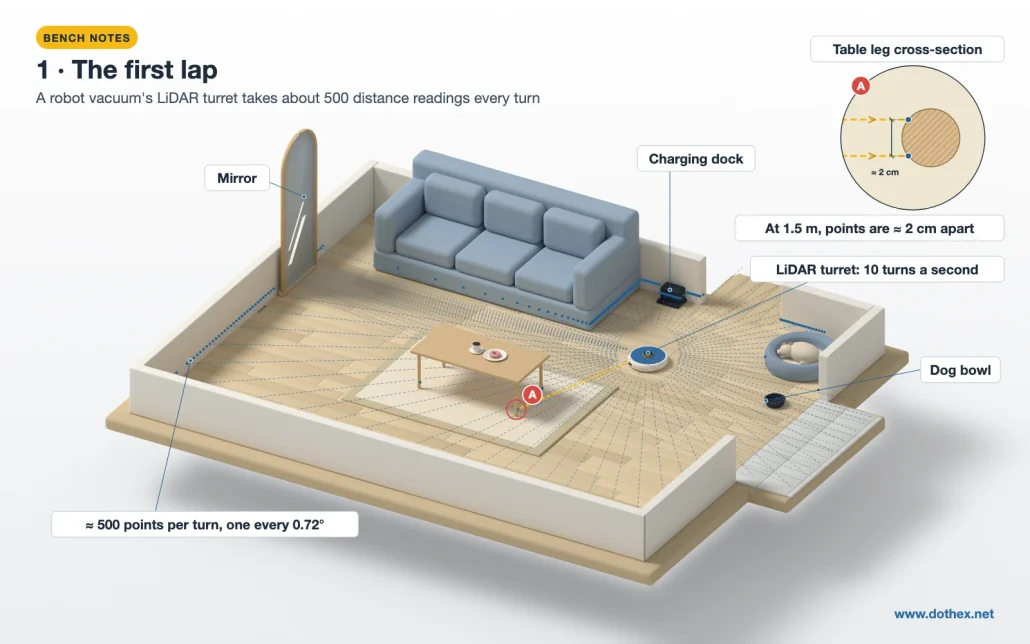
SLAM in a living room: how a robot vacuum builds a map
November 24, 2026
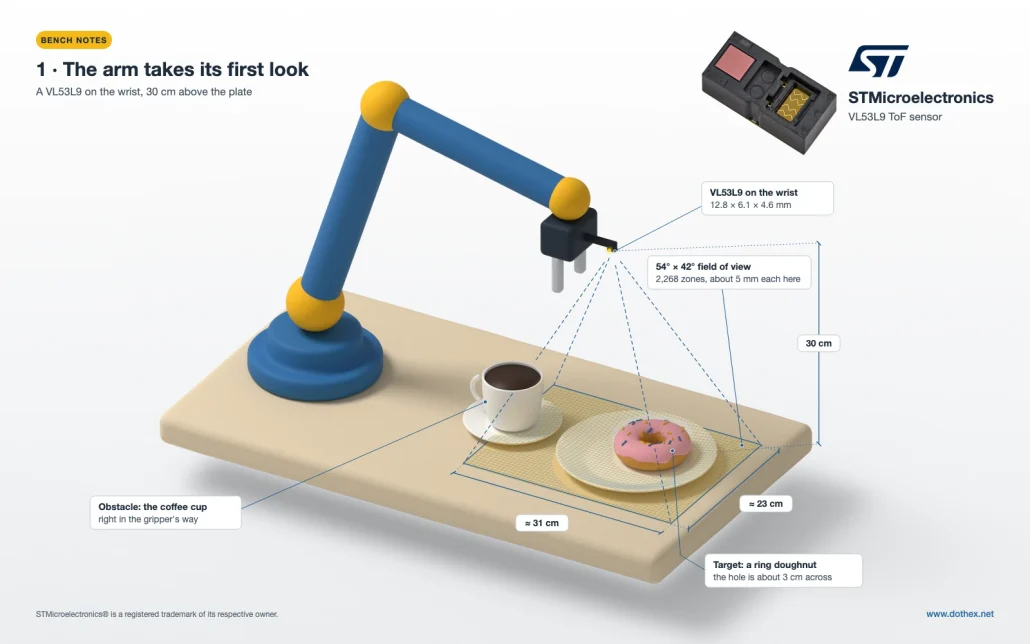
2.3K zones: what a robot sees in 3D with ST’s VL53L9
November 10, 2026

Ultra Low Power Microcontrollers: STM32L5 Series
March 7, 2020